
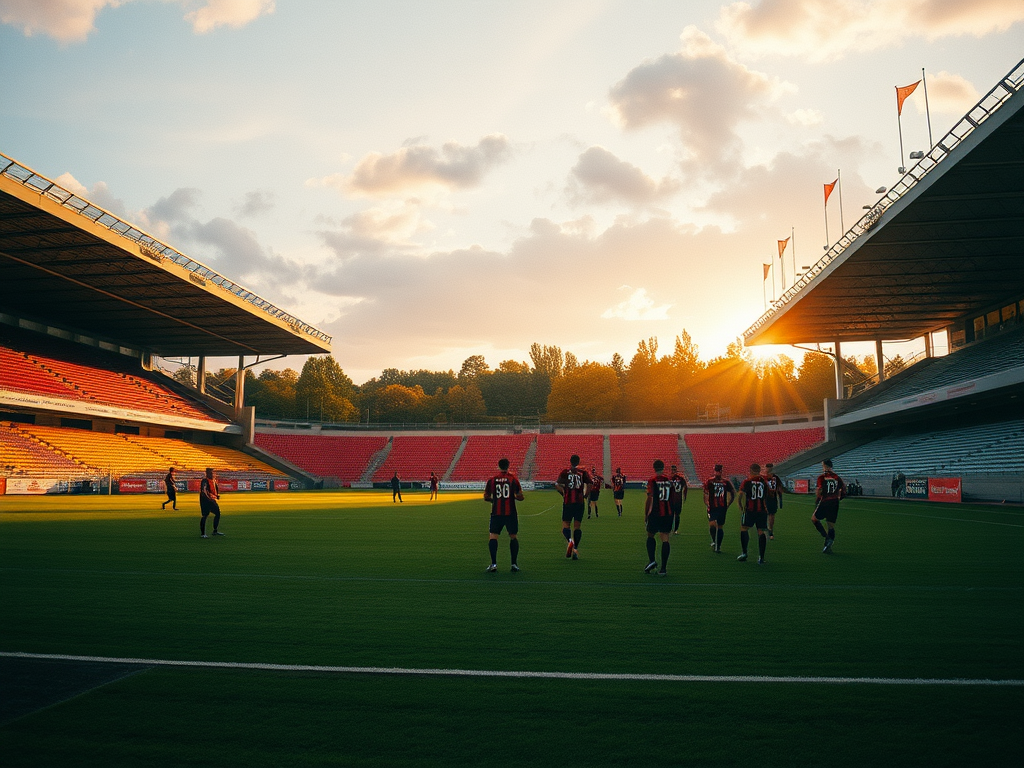
Strategic Adjustments for Arbroath: Finding the Right Balance
As Arbroath continues its campaign in the Scottish Championship, their recent form suggests that while there are commendable aspects to their play, some tactical tweaks could elevate their performance to new heights. With the team showing flashes of brilliance but also inconsistency, it’s worth delving deeper into their tactical setup and identifying areas for improvement.
One notable observation in recent matches is the way Arbroath has approached ball retention and transition phases. While the team has demonstrated an ability to control possession in certain segments of the game, there have been instances where quick transitions from defense to attack have faltered. By emphasizing the need for sharper, more incisive passing during these moments, Arbroath could exploit the defensive lapses of their opponents more effectively. Encouraging midfielders to make more dynamic runs into the attacking third could create additional space for forwards, enabling them to capitalize on any defensive weaknesses.
Defensively, Arbroath has occasionally struggled against teams that apply high pressure. The backline has been solid for the most part, but when faced with aggressive pressing, they have been prone to errors that lead to opportunities for the opposition. A tactical tweak that could benefit the team is the introduction of a more staggered formation when under pressure. By encouraging full-backs to push higher up to provide width while allowing center-backs to play slightly deeper, Arbroath could maintain composure and build from the back more effectively.
Moreover, the team's attacking patterns could benefit from a re-evaluation. Recent matches have seen the Red Lichties relying heavily on wing play, which, while effective at times, can become predictable. Integrating more central attacks through a fluid front three could create unpredictability and stretch opposing defenses. This could involve encouraging a central striker to drop deeper occasionally, allowing wide players to cut in and create goal-scoring opportunities. This not only diversifies their attacking play but also increases the chances of breaking down resilient defenses.
Another critical area for consideration is the use of substitutions. The timing and nature of substitutions can play a pivotal role in influencing the outcome of a match. It would be beneficial for the coaching staff to consider more proactive substitutions that can alter the game's dynamics rather than reactive ones based on the state of the match. Introducing fresh legs in key areas can reinvigorate the team's approach, especially in the latter stages of a match when fatigue sets in.
Finally, fostering a stronger sense of cohesion and understanding among players will be essential. This can be achieved through focused training sessions that encourage players to develop their chemistry on the pitch. The more intuitive their play becomes, the more effective their execution of tactical plans will be, allowing Arbroath to maximize their strengths and mitigate weaknesses.
In conclusion, while the Red Lichties have shown promise in their recent performances, a few strategic adjustments could enhance their competitiveness in the Scottish Championship. By refining their approach to ball retention, defensive organization, attacking patterns, and substitution strategy, Arbroath can look forward to a more fruitful remainder of the season. The fans at Gayfield Park can remain hopeful that tactical tweaks will translate into improved performances on the pitch.